
Neighborhood Insights: Newmarket's Push for Affordable Density
As Newmarket transitions from a classic suburban community into a highly intensified, transit-aligned urban center, it faces a unique developmental challenge. Regional planning reports estimate that Newmarket's population will expand from approximately 90,000 to 110,000 residents by 2051. While this represents the slowest projected growth rate in York Region, the way Newmarket must grow is entirely different from its neighbors.
Unlike neighboring East Gwillimbury, which is poised to balloon to a matching population of 110,000 by developing 180 hectares of greenfield land, Newmarket has zero new greenfield land allocated for growth. This means all future residential and commercial expansion must be absorbed within the town's existing built boundary, specifically along the Yonge Street and Davis Drive regional corridors. Under the town's Urban Centres Secondary Plan, these low-density, auto-centric retail corridors are actively transforming into walkable, high-density zones designed to ultimately support 33,000 residents and 32,000 jobs.
The Real Estate Transition and the "Gentle Density" Shift
The local housing market is adjusting to a shifting economic climate. Following a pandemic-era peak in February 2022 when the average home price in Newmarket reached an unprecedented $1.4 million, prices have settled. By mid-2026, the average selling price in the town declined to approximately $1.08 million (specifically $1,069,700), representing a 4.6% year-over-year reduction.
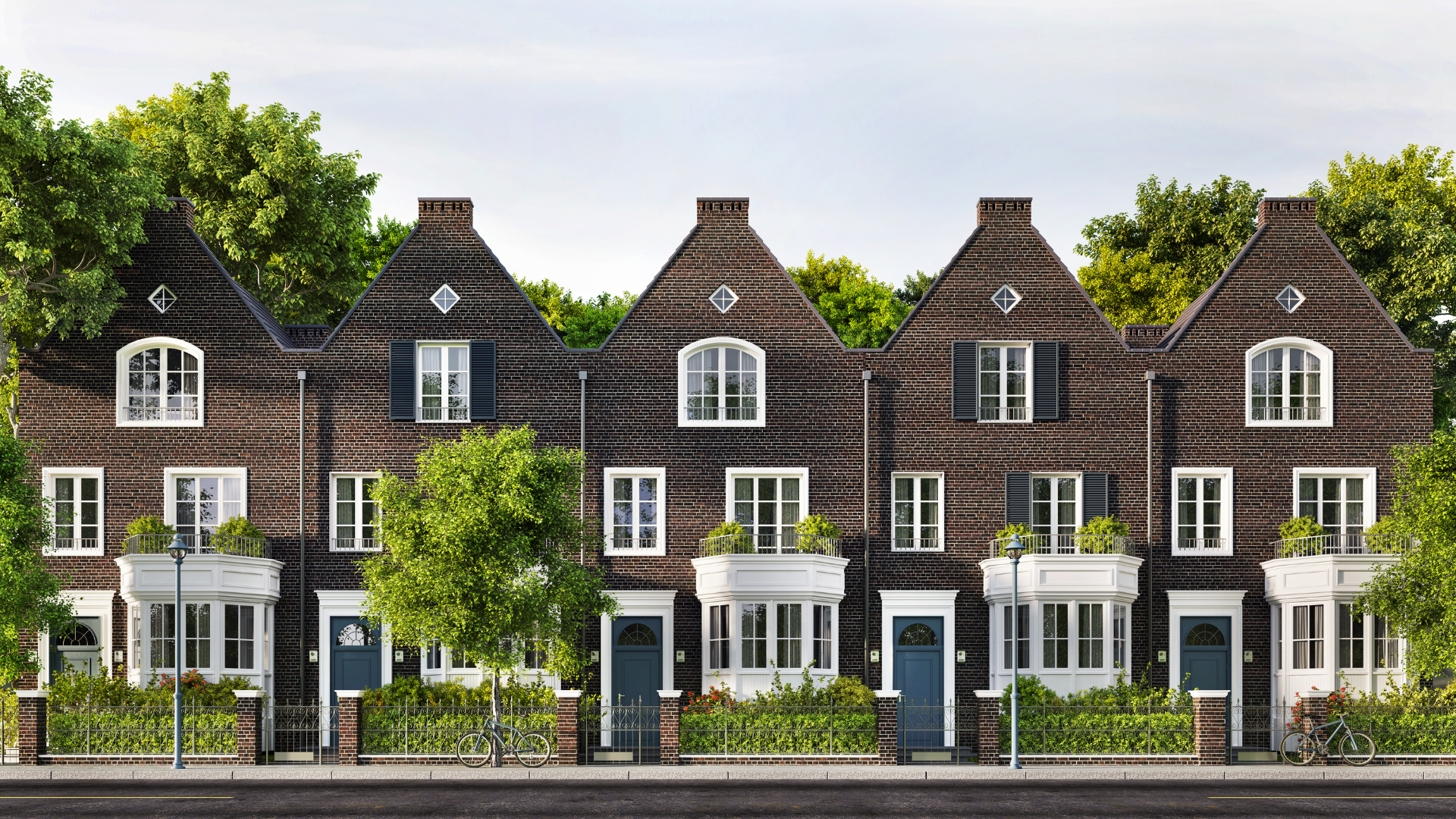
While this price correction has eased entry points, standard detached houses remain out of reach for many young families. This affordability gap has driven a massive surge in demand for "gentle density" formats. This shifting demand is highlighted by the distinct pricing differences across Newmarket's various housing types (based on mid-2026 and July 2026 TRREB market data):
-
Detached Dwellings: Average sold price of $1,096,908 (median of $1,065,000), showing a 4.6% year-over-year decline and selling in a fast, region-leading 23 days on average.
-
Condominium Townhouses: Average sold price of $841,330 (median of $709,990), reflecting a 20.9% year-over-year increase on highly limited transactional volumes, selling in 27 days on average.
-
Freehold Townhouses: Average sold price of $823,000 (median of $822,000), down 9.1% year-over-year, selling in 27 days on average.
-
Semi-Detached Dwellings: Average sold price of $769,733 (median of $827,250), down 14% year-over-year, selling in 27 days on average.
-
Condo Apartments: Average sold price of $512,000 (median of $466,000), down 11.7% year-over-year, representing the most affordable entry point in York Region with an average of 59 days on the market.
Overcoming the Wastewater Servicing Bottleneck
The primary bottleneck holding back Newmarket's intensification is not a lack of developer interest or local zoning, but a severe regional deficit in wastewater treatment capacity. For over a decade, major housing developments in Aurora, East Gwillimbury, and Newmarket were stalled awaiting the approval of the Upper York Sewage Solutions (UYSS) reclamation plant.
To break this gridlock, the Ontario government passed the Supporting Growth and Housing in York and Durham Regions Act, 2022. This legislation officially withdrew the UYSS proposal and mandated a southern-focused wastewater strategy. This new project requires York and Durham Regions to construct a massive gravity sewer system to redirect wastewater from the northern towns southward to the Duffin Creek Water Pollution Control Plant in Pickering. However, this critical infrastructure will not be fully operational until at least 2027 or 2028. In the meantime, York Region is relying on stopgap upgrades, such as the Aurora and Henderson pumping stations, to unlock highly restricted temporary capacity.
The 6,400-Home Housing Pledge
This infrastructure bottleneck sparked a major political standoff. The province originally assigned Newmarket a mandatory target of 12,000 new homes by 2031. Newmarket Town Council formally rejected this target as mathematically impossible, pointing out that the town’s historical 10-year average is only 375 home builds per year, and that the town would hit its physical sewage capacity limits almost immediately.
Instead, Newmarket successfully put forward a modified Municipal Housing Pledge targeting 6,400 new homes by 2031. Even though this is half of the province's initial target, this "stretch goal" still represents a dramatic 147% increase over Newmarket's historical building average.
Importantly, Newmarket is one of the few Ontario municipalities to set explicit sub-targets to address the affordability gap:
-
1,250 dedicated rental housing units.
-
400 non-profit or subsidized housing units.
To help hit these targets, the town is streamlining approvals and partnering on major regional projects. A prime example is the 62 Bayview Parkway community housing redevelopment owned by York Region. This inclusive project will provide 30% of its units at market rent and 70% at affordable rent (rent-geared-to-income), with construction scheduled to begin in 2026 and occupancy slated for 2029. By focusing on gentle density and transit-oriented corridors, Newmarket is paving a realistic, infrastructure-conscious path toward complete and accessible communities.